
Minister Training
Completion of prescribed courses of study supports IRS church characteristic #8 and the ministry's ordination standards.
Ministry training
Six short video lessons to help you serve with confidence. Watch each one, read the notes, then check it off.
Loading your training...
Lesson 1: Where the Church Began: Christianity in America
How the church first grew in America, and why so many kinds of churches live side by side here.
About 3 minutes
Lesson 2: Our Neighbors: Understanding Islam and the Holy Land
Meet our Muslim neighbors. Learn what they believe and why the Holy Land is dear to so many families.
About 3 minutes
Lesson 3: Every Denomination, One Family
Baptist, Methodist, Pentecostal, and more. Many names, one big family of faith.
About 2 minutes
Lesson 4: Understanding the Catholic Church
The oldest branch of the Christian family. What our Catholic neighbors believe and how they worship.
About 3 minutes
Lesson 5: Creeds and Roles: The Vocabulary of the Church
Simple words church people use, like creed, pastor, and deacon, and what each one means.
About 2 minutes
Lesson 6: The Lord's Prayer and the Prayers of Many Faiths
The prayer Jesus taught his friends, and how people of many faiths talk with God.
About 3 minutes
Overall Progress
Loading...
508(c)(1)(A) Foundations
What the status is, how it differs from 501(c)(3), and why it must be lived out in daily operation.
What a 508(c)(1)(A) Organization Is

Section 508(c)(1)(A) of the Internal Revenue Code recognizes churches, their integrated auxiliaries, and conventions or associations of churches as tax exempt by their very nature. Unlike most nonprofits, a church does not have to apply to the IRS for recognition of exemption. The exemption exists because the organization is a church, not because a letter arrived from Washington.
A ministry organized under this section operates as a faith-based organization with a religious purpose at its core. For a ministry like ours, that purpose is lived out through worship, teaching, service, and stewardship of the resources placed in our care.
Ministers should understand that this status carries both freedom and responsibility. The freedom is real: no application, no annual information returns, no IRS pre-approval of activities. The responsibility is also real: the ministry must actually operate as a church, because the status depends on what we do, not on paperwork we filed.
How 508(c)(1)(A) Differs from 501(c)(3)

A 501(c)(3) nonprofit receives its exemption only after filing Form 1023 and receiving a determination letter from the IRS. It must file a Form 990 series return every year, and the IRS can revoke its exemption for failures. Churches are specifically carved out of those requirements.
Churches are still free to apply for 501(c)(3) recognition, and some do because donors or banks ask for a determination letter. But the law does not require it. A church that rests on 508(c)(1)(A) alone keeps its exemption without the application, the annual 990 filing, or the public disclosure rules that come with them.
The practical difference for ministers: donations to the ministry are still tax deductible to the giver, and the ministry still must obey the law. What changes is the reporting relationship with the IRS. Under 508(c)(1)(A), the ministry answers first to its own doctrine, its governing documents, and its members.
The Mandatory Exception from Form 990

Section 6033 of the Code requires most exempt organizations to file an annual information return. The same section states that churches, their integrated auxiliaries, and conventions of churches are mandatorily excepted from that requirement. This is not a waiver the IRS grants case by case. It is written into the statute.
The exception means the ministry never files Form 990, 990-EZ, or 990-N. There is no deadline to miss and no penalty to avoid. Ministers should be able to explain this plainly, because knowing why we do not file is part of understanding our status.
The exception from filing is not an exception from honesty. Contributions must still be receipted, funds must still be used for ministry purposes, and records must still be kept. The difference is that the records live in the ministry's own books, ready if ever needed, instead of flowing to the IRS each year.
Why Operational Compliance Matters
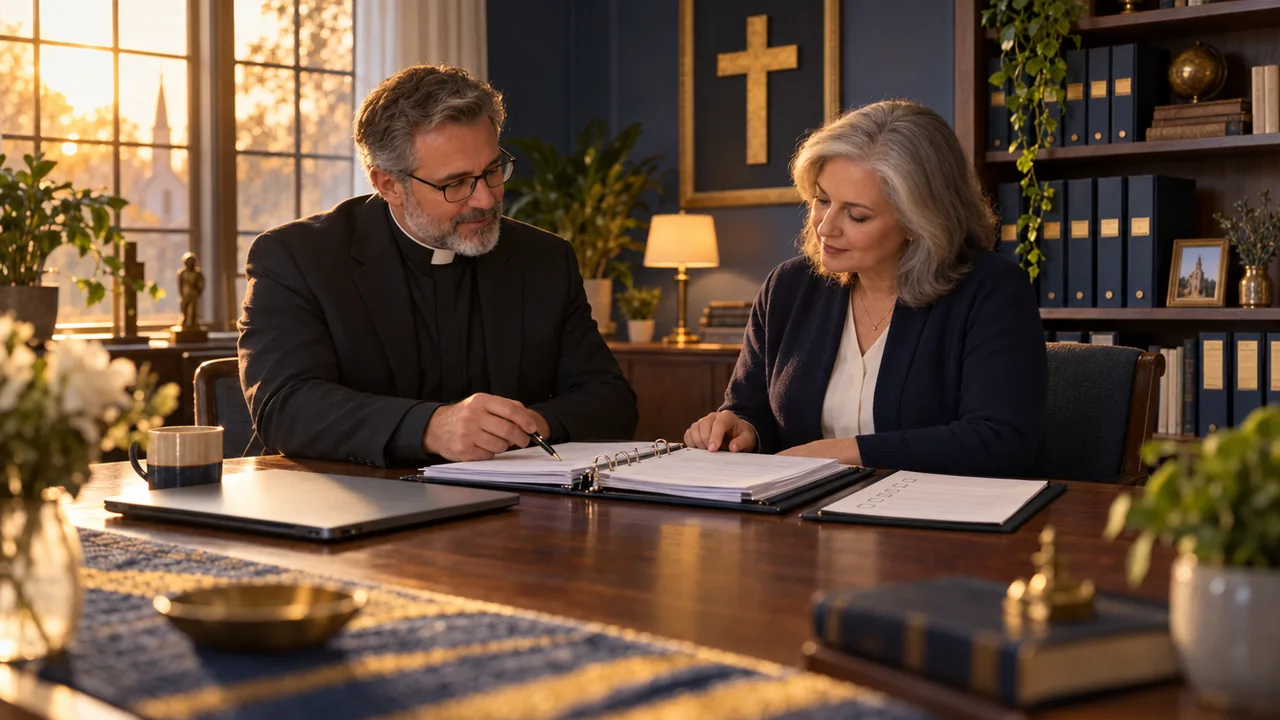
A church's exemption rests on how it actually operates. The IRS applies a set of characteristics, often called the fourteen points, to decide whether an organization functions as a church. Regular worship, ordained ministers, established doctrine, and ministers trained through prescribed courses of study are all on that list.
Completing this training is one way the ministry demonstrates characteristic number eight: ministers selected after completing prescribed courses of study. Every lesson you finish becomes part of the record showing the ministry takes its standards seriously.
Operational compliance is a daily habit, not an annual event. Services held, minutes kept, donations receipted, and funds handled properly all add up. When the habits are strong, the status protects itself.
Governance & Records
Ecclesiastical government, doctrine and discipline, and the records that prove the ministry operates as one.
Ecclesiastical Government
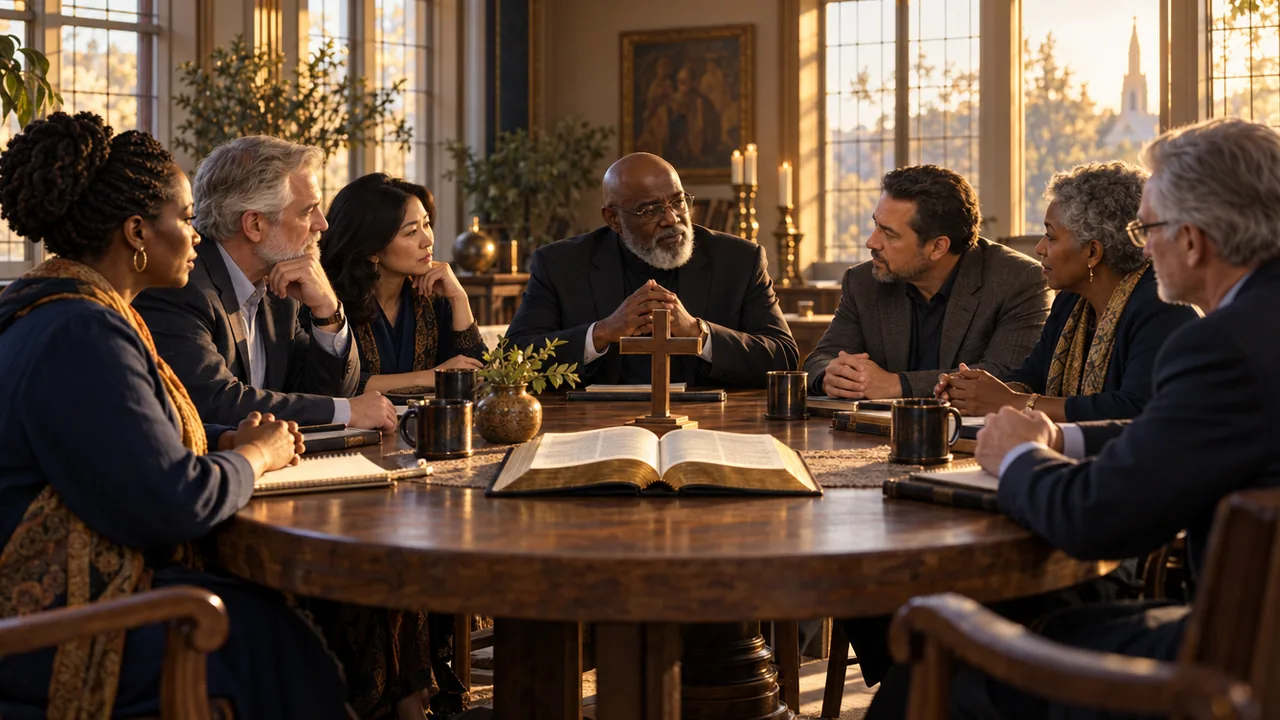
A church is expected to have a definite and distinct form of ecclesiastical government. For our ministry that means ordained leadership, a board or council described in the governing documents, and decisions made and recorded in an orderly way.
Ministers should know who holds each office, what authority each office carries, and how decisions are made. If you do not know, ask. Acting outside your authority, even with good intentions, creates confusion and weakens the ministry's governance record.
Meetings that make decisions should produce minutes. Minutes do not need legal language. They need the date, who was present, what was decided, and who was assigned to act. File them where the ministry keeps its permanent records.
Codes of Doctrine and Discipline

A formal code of doctrine and discipline states what the ministry believes and how its members and ministers are expected to conduct themselves. It answers questions before they become disputes: what we teach, how we worship, how we handle money, and how we correct problems.
Every minister should read the ministry's doctrinal statement and discipline code at least once a year. You cannot represent beliefs you have not read, and you cannot follow standards you have not studied.
When a situation arises that the code addresses, follow the code. When it does not, bring the question to leadership instead of improvising a rule on your own. Consistent practice is what makes a code real instead of decorative.
Record-Keeping and Separate Accounts

Ministry money and personal money must never mix. The ministry keeps its own bank account, and every dollar in or out of that account should be traceable to a ministry purpose. Paying a personal bill from the ministry account, even temporarily, is the fastest way to damage the ministry's standing.
Log ministry activities as they happen. Services held, visits made, supplies purchased, miles driven for ministry work: a simple dated log entry is enough. Records written the same week are accurate. Records reconstructed a year later are guesses.
Keep receipts for every expenditure and a record of every contribution. Store them in one place, in order, by date. If the ministry is ever asked to show how it operates, organized records answer the question in minutes instead of months.
Donor Contribution Acknowledgments

When someone gives to the ministry, acknowledge the gift promptly and in writing. A written acknowledgment should state the ministry's name, the date of the gift, and the amount, or a description of donated property.
For any single contribution of $250 or more, the donor needs a written acknowledgment from the ministry to claim a deduction, and it must say whether any goods or services were provided in exchange. For most gifts the answer is that no goods or services were provided, other than intangible religious benefits.
Send acknowledgments without being asked, and keep a copy in the ministry's records. A donor who receives a prompt, accurate receipt trusts the ministry with the next gift. A donor who has to chase a receipt remembers that too.
Conducting Worship & Ordinances
Leading regular services, performing weddings, baptisms, and funerals, and the basics of pastoral care.
Leading Regular Services

Regular religious services are one of the clearest signs of a functioning church. Set a schedule and keep it. A small congregation meeting faithfully every week demonstrates more than a large gathering that happens occasionally.
A simple service order works: opening prayer, scripture reading, teaching or message, song or reflection, closing prayer and announcements. Write the order down so any ordained minister can lead a service when the usual leader is away.
Record each service in the ministry's activity log: date, who led, attendance, and any ordinances performed. This log is part of the ministry's operational record and takes less than a minute per service.
Weddings, Baptisms, and Funerals

Ordained ministers may be called on to solemnize marriages, baptize believers, and conduct funerals. Each state sets its own rules for who may perform a marriage and how the license must be completed. Before officiating a wedding, check the current requirements of the state where the ceremony will take place and follow them exactly.
For every ordinance, record the date, the names of those involved, the location, and your name as officiant. For weddings, complete the marriage license promptly and return it to the issuing office within the required time. A late or incorrect license creates real problems for the couple.
Prepare for each ceremony with the people involved. Meet the couple before the wedding. Meet the family before the funeral. Ask what they need, explain what you will do, and arrive early on the day. The ceremony belongs to them; you are there to serve it.
Pastoral Care Basics

Pastoral care is the ordinary work of being present: visiting the sick, calling the grieving, checking on members who have been absent, and listening more than you speak. Most people do not need a lecture. They need someone who shows up and remembers their name.
Keep confidences. What someone tells you in a pastoral conversation stays in that conversation unless safety or the law requires otherwise. Trust, once broken, is rarely rebuilt.
Know your limits. Ministers are not therapists, doctors, or lawyers. When a situation goes beyond spiritual care, say so plainly and help the person connect with a qualified professional. Referring someone to real help is good ministry, not a failure of it.
Minister Ethics & the Universal Creed
Respect for every tradition, family treatment for every person, and integrity in the ministry's name.
Respect for All Denominations

Our ministry holds that faith takes many honest forms. Ministers will meet believers from other denominations and other traditions, and they are to be treated with respect, never with mockery or rivalry. We can hold our own convictions firmly while honoring the convictions of others.
In practice this means no disparaging other churches from the pulpit, in conversation, or in print. When asked about differences, answer plainly and without contempt. When working alongside another congregation on community needs, work as a partner.
Respect also means honesty about who we are. Do not claim the endorsement of other denominations, and do not hide our own identity to avoid a hard conversation. The universal creed we hold begins with honoring the faith journey of every person we meet.
Treating Everyone Like Family

The ministry's creed asks ministers to treat every person as family: the member who gives generously and the stranger who walks in with nothing. Family treatment means warmth without favoritism, and help without a price attached.
Watch for the quiet hierarchies that form in any group: donors over non-donors, old members over new, the easy over the difficult. Ministers set the tone. Greet the stranger first. Learn names. Follow up when someone is missing.
Family also tells the truth. Kindness does not mean avoiding hard words when someone is being harmed or the ministry is being misused. Speak plainly, privately first, and always with the aim of restoring rather than punishing.
Avoiding Private Inurement

Private inurement means the ministry's money or assets benefit an insider personally, beyond reasonable compensation for actual work. It is the one failure that can destroy the ministry's exempt standing faster than any other. Ministry funds exist for ministry purposes, full stop.
Never borrow from ministry funds, never use the ministry account for personal purchases, and never sign a ministry check to yourself outside of documented, approved compensation or a reimbursement backed by receipts. If a transaction would look questionable on a printed statement, do not do it.
If you are unsure whether something counts as inurement, ask before acting. Leadership would rather answer a careful question than repair a careless transaction. When in doubt, keep the money in the ministry and the paperwork in the file.
Representing the Ministry with Integrity

A minister carries the ministry's name into every room. Speak about the ministry accurately: what it does, what it believes, and what its status means. Never exaggerate the ministry's size, finances, or legal position to impress or to persuade.
Integrity shows in small things: returning calls, arriving on time, doing what you said you would do, and admitting mistakes quickly. A minister who handles small promises well will be trusted with large ones.
When you complete this training, you join the line of ministers this ministry has prepared and ordained. Carry that with seriousness and humility. The calling is older than any of us, and the standard is higher than any single ministry.